Friday, February 18, 2011

Grand Moments at the Oregon Truffle Festival
By Jenie Skoy

A few weeks ago, I feasted on Oregon truffles at the Oregon Truffle Festival in the Willamette Valley: the damp, ferny, mossy region in Oregon famous for sweet, rosy pinot noir and mysterious truffles!


Willamette Valley Vineyards hosted a "truffle dog training seminar" (the only event of its kind in North America, say the organizers!) and 18 truffle hunters and their canines spent a weekend in truffle training in forests where truffles lay.


Here's a video of Martha and her Dog Saylor!

Dog owners were able to observe the handling and training of skilled truffle dogs, and to introduce their dog to the scent of both Oregon and French black truffles. This two-day event began in the classroom, with lectures on canine scent detection and fundamentals of scent training then ended in a forest seeded with truffle spores!

I wonder how, after these dogs have gotten a whiff (and taste) of truffles, they'll ever be satisfied with dog bones again!!

Compared with Europe, Oregon's truffle industry is young and undiscovered.
"Secrecy pervades the world of truffles and is a part of their mystique, but it has not served Oregon’s truffles well, as secrecy precludes development of the knowledge necessary to bring the real potential of the Oregon truffles to market. Simple details like how to choose and handle a truffle to tease out its grandeur are known to only a few harvesters and chefs." says the Oregon Truffle Festival Website
.

Above is loveable Finn, a Lagatto Romagnola, the breed with sharp senses known for their truffle hunting acumen. His owner, Holly, adopted him from the Dordogna region in France famous for wine, truffles and truffle hunting. Finn dug up the truffles, but had a problem giving them up. "His biggest problem is that he eats the truffles!" said Holly.


Digging up Oregon's White Gold! Willamette Valley Vineyard's winemaker Don Crank was in the forest to help truffle hunters.


These Oregon white truffles were dug up by a cute cocker spaniel puppy at Willamette Valley Vineyards.


This cute German Shepard dog, Sahalie, or "Holly" for short, or what her owner called her: "Turd Bird," was one of the best truffle hunters in the forest that day, in part because her owner runs a obedience school in Oregon City and she was so well-behaved.
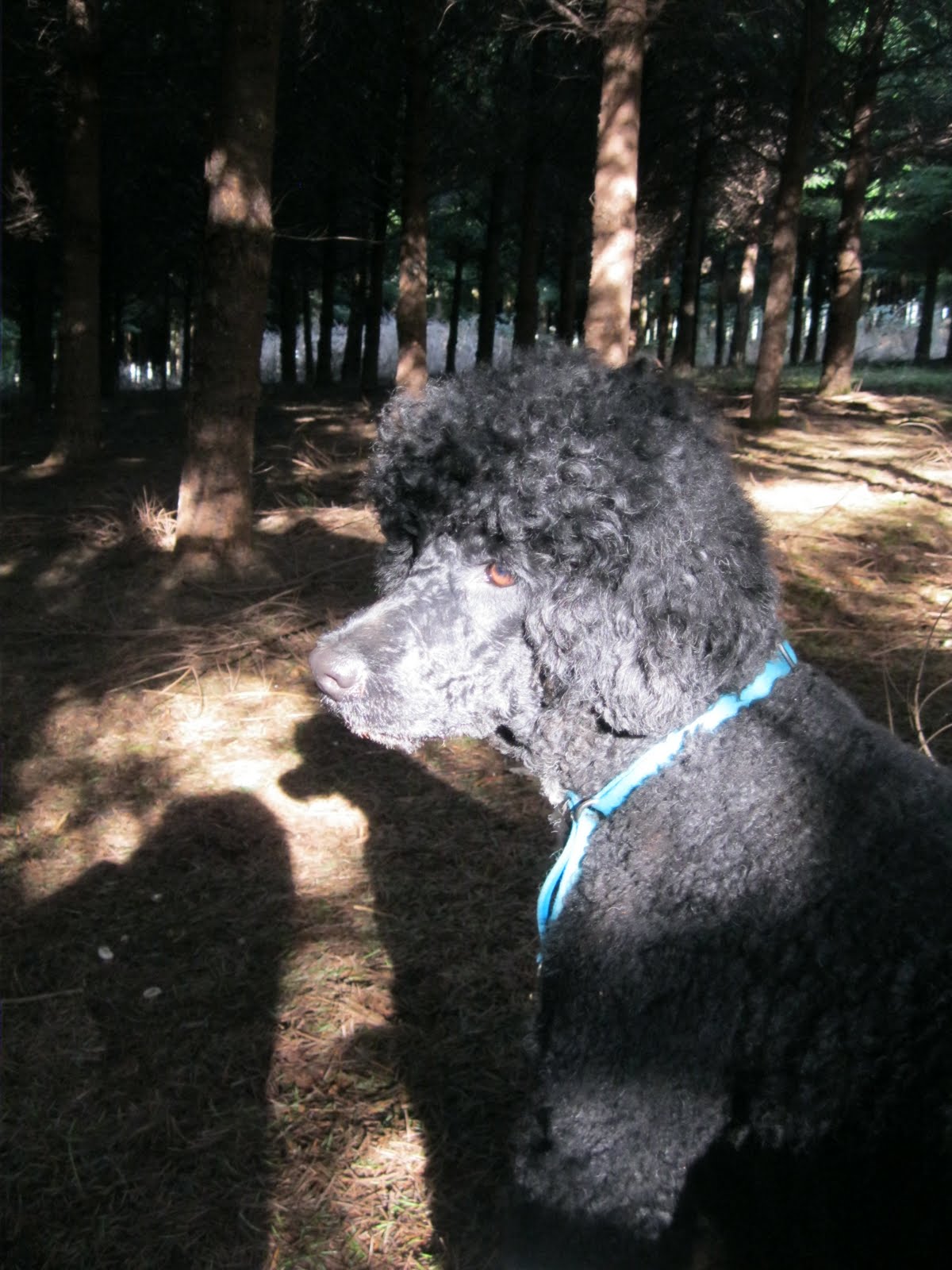


Saylor , above, takes a moment to pause between truffle hunting. At this point, she was more interested in the roasted chicken in her owner's pocket!


This scene felt a little Red Riding Hood-ish with the wolf-like dog and young girl in a magical forest filled with truffles!


After the truffle hunting, we met in the dining room at Willamette Valley Vineyards for a truffle-infused lunch cooked up by executive chef at Timberline Lodge, Jason Stoller Smith.


Sinclair Philips, owner of Sooke Harbour House on Vancouver Island has a childlike fascination with truffles. Look at how his eyes light up!


Sinclair is a Slow Food Convivium leader in the Northwest. His soup will just have to wait until he's finished photographing a handful of black truffles.


Here's Sinclair talking up Willamette Valley Vineyard's wine at the dinner!

A few hundred dollars worth of these addictive fungi!

Artist, photographer and truffle sniffer, Douglas Gayeton, was in our neighborhood to research ideas for his book Lexicon of Sustainability


The perfect Oregon dish! Jason Stoller Smith, executive chef at Timberline Lodge cooked up this delicious Oregon lamb with black truffle stuffed lamb breast, black truffle parsnip puree with rootbeer and truffle gelees and chervil and grape gremolata.


Imagine our joy when they passed around whole truffles and grater!

FYI: Next week, Rex Pickett, the author of “Sideways,” the book that helped fuel the popularity of pinot noir wines will be in Portland to talk about his new book, “Vertical" in which characters Miles and Jack head to Oregon to taste some wines at vineyards like Van Duzer. Here's a link to Sideways

Stay tuned for PART TWO of my Oregon Truffle adventure, plus videos of the truffle dog training!


Cheryl Crumbley, marketing director of Lane County's United Way smells bing cherries in her glass of Willamette Valley Vineyard's pinot noir at the Grand Truffle Dinner in Eugene last month.

Friday, January 07, 2011

Cascade Baking Company is rolling in the green-- and yellow!

One bakery in Salem Oregon is feeling the love for the Oregon Ducks today and making bank with green and yellow bread to celebrate today's BCS Championship game in Arizona. Cascade Baking Company say's they'll make 100 loaves for U of O fans today. GO DUCKS!


Here's a video of some of the bakers cooking up their special bread for the game!


Cascade Baking Company makes non-alien like looking bread too (unlike the green and yellow bread in the photos above.) They make some wonderful artisan breads. One loaf is made with wheat grown in the Willamette Valley grown at Stalford Seed Farmers in Tangent.

It's an oddity that the wet Willamette Valley is able to grow wheat for bread flour, Stalford Seed Farms in one of the first farms to grow this special bread wheat able to withstand the wet. It's been boon for bakers who want to bypass commodity wheat and keep the "LOCAL" label on their bread.


The wheat is milled in Brownsville, Oregon and is courser than other wheat.


Friday, November 19, 2010

One Flew Over the Cuckoo's Nest Pie


Today, November 19th, marks the anniversary of the premier of One Flew Over the Cuckoo's Nest film by brilliant director Milos Forman.
I just moved to Salem, Oregon, a few hours away from Ken Kesey's hometown of Springfield, Oregon. Salem is also home to the Oregon State Mental Hospital where they filmed the classic flick back in the 70'.


Interestingly, Salem just unveiled the new Oregon State Mental hospital to replace the 127-year old hospital where the film was set. It's a far cry from how the film portrays the hospital. It's a state-of-the-art space where patients will receive some of the best treatment available.

One night after watching One Flew Over the Cuckoo's Nest, I decided to bake a pie in honor of the movie.. and what did I use as main ingredients?... duh, nuts and banannas!

Here's my rough recipe:

I heated up sugar, carmelizing it, then added butter, chocolate chips, a bit of cinnamon and cardamom and poured the mixture over whole walnuts, which gave them a toffee-like flavor.


I chopped up the toffee-coated walnuts and put them on the bottom of a pie crust and then added ripe banannas.

I made a quick custard with eggs, sugar, butter, vanilla and milk and poured it over the top of the pie then sprinkled cinnamon over the top.


When I make this pie again, I plan to use milk from the Springfield Creamery, the creamery that produces Nancy's Yogurts, and is Kesey's original dairy run by Ken Kesey's older brother Chuck, his wife Sue and their son Kit and daughter Sheryl. Read this Seattle Times article Counter Culture about the different lives Ken and Chuck lived and the Springfield Dairy.

Then I cooked the pie until the banannas were soft and pie crust brown.


Friday, October 22, 2010

Windfall of Apples
This fall, my brother Brig took it upon himself to keep as many Southern Idaho apples from rotting on the ground as is humanly possible. He enlisted his whole family as apple-picking agents and also recruited me to join his special forces!


He and his wife Missy loaded their family in the van, picked up me and mom, and drove through the back roads of Idaho looking for neglected apple trees for apple picking. My brother's neighbor had built an apple cider press and a few families in his neighborhood had planned to get together and press cider.


It's amazing how many apples go to waste. Delicious, wild apples from trees that are neglected. Many people just get busy and don't take the time to pick their apples. Perhaps year after year they just get tired of picking and making oddles of apple products with their harvest, so trees go neglected.


But there's something a little sad to me about seeing rotting apples on the ground when there are people who go hungry and when it costs a few bucks a pound to buy apples in the store.


Here's my sister-in-law, Missy, standing by some waxy looking conventional apples.

So, here was Brig's strategy: 1) FIND a tree that's bulging with apples (with apples littering the ground near the trunk) 2) KNOCK on the door of the closest neighboring home. 3) ASK politely to pick the apples, offering the landowner a bushel.


I'm taking this photo from inside the van where we wait to see if we can descend on this guy's trees like a swarm of hungry locusts. Brig is talking to a friendly farmer who said, "sure, take as many as you want, just leave me a bag on my front porch!"


My brother and mother decided to be the tree climbers. It was pretty great to see my 60-something year old mom high in a tree.


Missy is reaching up to pick a lovely apple!


My nephew Dylan has no fear, he was trying to get as high up in the tree as possible. He's part monkey, like this monkey guy.


We collected about 3 large rectangular tubs full of apples, loaded them in the back, then headed home to where we'd press the apples into cider!


We took off the leaves and washed the apples.


This cute guy is my boyfriend Andrew (the one in the background, not the chicken). When Andrew was not distracted by the novelty of feeding Brig's dancing chickens out of his hand, he was helping turn the wheel that pressed the apples into cider!


Pressing cider is a very manly activity!


My sister Cara is helping the kids throw the apples into a hand-cranked grinder.


So what you do, is throw the apples in a little opening in the press that has a nobbly wheel inside, that turns the apples into pulp.


My favorite part of the press is this wonderfully sweet foam!!


What is left after you press out the juice!


This is Brig holding up fresh beer, er, I mean cider. YUM!

Friday, June 18, 2010

The Skinny on Real Milk
Oregon dairyman sells cow shares in order to give customers raw milk

Two guys who know cows: Mike Duggan (on the left) raises cattle on 100 percent grass for beef on 200 acres at D&D Ranch in Terrabonne, a beautiful place close to Smith Rock State Park near Bend, Oregon. Beside him stands Bill Sieburg, the dairyman from Central Oregon Jersey Farm in La Pine who sells cow shares in order to offer locals raw, unpasteurized milk.

A cow looks up from grazing on grass near Mike Duggan's farm, with a view of Smith Rock in the background.


(Mike also sells this yummy honey produced by bees on his ranch.)


I spent a week in Bend, Oregon searching for "real" food and discovered what I think is one of the region's food gems: "real" milk. Pasture-fed, unprocessed and full-fat milk produced by purebred jersey cows from Central Oregon Jersey Farm. Billy Sieburg, the dairyman there, sells milk to people who come to the farm in La Pine and delivers the milk to CSA's in Redmond and Bend. I met Billy at the Agricultural Connections CSA created by Andrew Adams (in photo below:)

Andrew, above, sells produces and milk from the Bend CSA he created, that offers Bend locals food from a 100-mile radius from the West, down in the Willamette Valley all the way to Madras in the Northeast.

In Oregon it's illegal to sell raw milk, (the FDA is concerned about the risk of the milk carrying pathogens that cause disease) so the only way you can get it is to buy a cow and drink milk your cow produces. That's why the farmers at Central Oregon Jersey's Farm sells cow shares, enabling consumers to BUY A COW on their farm, allowing them to own a share of the herd.

Most commercial milk comes from breeds of modern holsteins bred so that they can produce three times as much milk as the old-fashioned cows. Basically, we've created a kind of Franken-cow that produces lots more milk to keep up with our consumption. But the milk is lower quality and the cows also tend to get sicker more easily (with mastititis, etc.)

Sieburg says he sells his buttery milk to people who are lactose intolerant. He says he's found that these folks can tolerate raw milk. He's a part of a movement that try to bring "real milk" back to the people. For more info, visit this Website dedicated to education about real milk. Local Bend or La Pine residents can contact Billy Sieburg at (541) 420-9599 or
email hims at cojerseyfarm@live.com
.
If you look closely at Sieberg's milk, you can see that a third of it is CREAM. YUM! Sign me up! One guy at the CSA where it was sold said it tastes like honey has been whipped into it.

There's a debate about the health of pasteurized verses unpasteurized milk, but some studies have linked pasteurized milk with lactose intolerance, allergies, asthma, frequent ear infections, gastro-Intestinal problems, diabetes, auto-Immune disease, attention deficit disorder and constipation, among other problems.

I'm a fan of raw milk. I've been off commercial cow's milk for ten years when I discovered I had a life-long allergy to milk, cheese and dairy products (something I'd suffered from since I was a child). The allergy caused me to feel like I had a constant sinus infection and after eating lots of milk, I'd even get vertigo. I now only eat goat's milk and sheep's milk and cheese or yogurt and feel great! But I have yet to try unpasteurized cow's milk myself. I'll have to try it and report back.